Bengaluru urban development expert

The idea of a metro train
V Somanna was given the responsibility of a ministerial post when he was a first-time MLA. From 1997 to 99, The idea of the Bengaluru Metro Rail. Urban Development Minister Somanna was a witness to the then-metro rail project in the presence of Chief Minister J H Patel. The Metro train, which was just a 'dream' is now a lifeline for Bengaluru!

V. Somanna’s Contribution to Bengaluru’s Cauvery Water Supply
In 1996, V. Somanna was appointed Minister for Urban Development under Chief Minister J. H. Patel. Recognising Bengaluru’s future water needs, he envisioned a large-scale Cauvery drinking water project and persuaded the state leadership to support it. With the support of senior officials and then Prime Minister H. D. Deve Gowda, the project’s blueprint was developed.
Despite challenges and concerns over opposition from villages along the route, Somanna worked to overcome obstacles and advance the project. Cauvery water was brought from the Torekadandahalli reservoir, around 100 km away. A network of elevated reservoirs was also planned to help distribute water across Bengaluru.
Somanna also opposed the privatisation of Bengaluru’s water supply, emphasising the importance of keeping this essential service under public control.
V. Somanna’s Stand for Affordable Water
Water leakage and unpaid bills caused significant losses to the Bangalore Water Board. In 1999, when the government considered privatizing the water supply system, V. Somanna strongly opposed the proposal and raised concerns in the Legislature about its future impact. Following his opposition, the then Chief Minister, S. M. Krishna, eventually dropped the privatization proposal, helping keep Bengaluru’s water supply under public control and protecting consumers from potentially higher water charges.
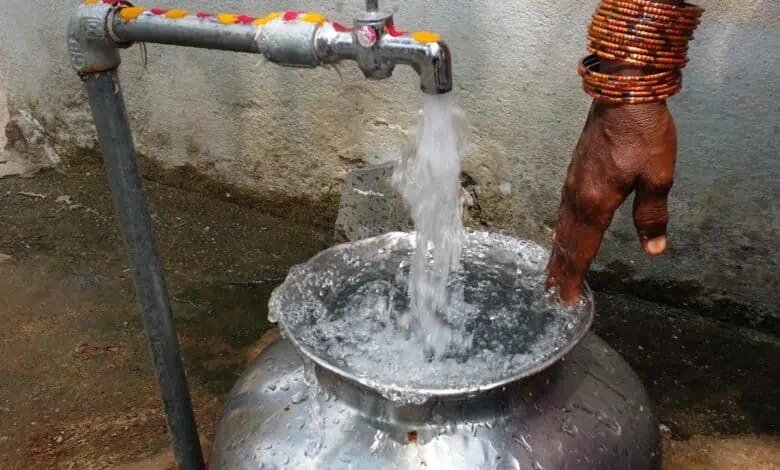
Regularising 65,000 Illegal Water Connections
During V. Somanna’s tenure as Bengaluru’s Urban Development Minister, around 65,000 illegal water connections were identified and regularised. This helped improve revenue for the Bangalore Water Supply and Sewerage Board (BWSSB). Pro-rata charges were also introduced, and the measures taken during the 1990s laid the foundation for better water supply management.


Bengaluru’s First Flyover: A Landmark in the City’s Development
In the 1990s, Bengaluru began facing serious traffic congestion, particularly on its major roads. In 1994, the Janata Dal-led government under H. D. Deve Gowda considered flyovers as a solution to the city’s growing traffic problems.
After J. H. Patel became Chief Minister, V. Somanna was entrusted with the Bengaluru Urban Development portfolio. During his tenure, he played a significant role in advancing the city’s infrastructure development.
One of the key projects was the K. R. Market Flyover, spanning approximately 2.2 km from Town Hall towards Mysore Road. At the time, traffic congestion around City Market caused daily difficulties for commuters. The flyover was planned to ease congestion and improve connectivity.
Despite criticism surrounding the project, V. Somanna helped drive it forward. Built by L&T, the flyover became a significant milestone in Bengaluru’s road infrastructure. His tenure also saw a broader focus on improving the city’s roads through flyovers and underpasses.
Legalisation of Revenue Sites for Planned Urban Development
During his tenure as Bengaluru’s Urban Development Minister, V. Somanna took steps to curb the illegal trading of revenue sites. He facilitated the regularisation of eligible sites by collecting nominal fees, bringing greater relief to the public. This initiative contributed to the systematic growth and planned development of the city.